My Bookshelf • Reading Notes
Strategic Insights for Founders and Leaders
“In chess, as in business, you cannot calculate every single move to the end. Success comes from combining deep strategic preparation with the intuition to adapt instantly when the board changes.”
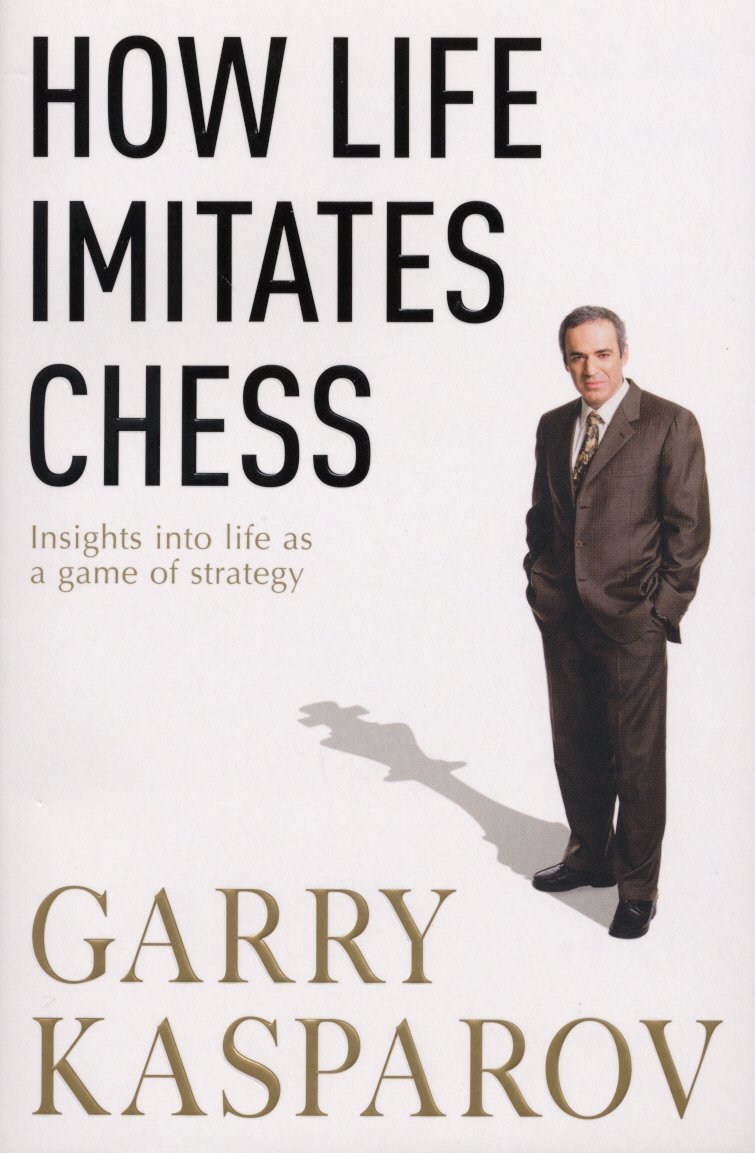
In How Life Imitates Chess, legendary World Chess Champion Garry Kasparov breaks down the mechanics of decision-making, pattern recognition, and strategy. For founders and corporate leaders, Kasparov’s principles reveal how to treat business challenges like a game of chess: balancing rigid preparation with rapid, flexible execution under high-stakes pressure.
The 6 Core Strategic Lessons
Strategic Evaluation: Continuously audit your business position and resources rather than relying solely on raw calculations.
Personal Playbook: Systematically study past decisions and outcomes to build a reliable mental framework for execution.
Balanced Intuition: Combine structured planning with rapid, experience-based intuition when high-stakes crises hit.
Multi-Step Foresight: Look three to five moves ahead to anticipate competitor reactions and market shifts before committing capital.
Decisive Accountability: Perform objective post-mortems on failed strategies and cut your losses quickly without ego.
Systemic Management: Treat success as a cohesive framework of moving parts—talent, capital, operations, and timing—working together.
The 6 Core Strategic Lessons
1. Master the Power of Evaluation
In chess and business, raw calculation alone is never enough. You must constantly evaluate your position, your resources, and your relative strengths versus your competitors. Regular strategic audits prevent you from executing brilliant tactics on a fundamentally flawed objective.
2. Build Your Personal Algorithm (Preparation)
Kasparov emphasizes that grandmasters don’t calculate everything from scratch during a game—they rely on deep preparation, analyzing past games, and building mental frameworks. Leaders must systematically study past decisions, successes, and failures to build a reliable decision-making playbook.
3. Balance Strategy and Intuition
While data and structured planning are essential, elite execution requires intuition built from experience. When a crisis hits, you won’t always have time for a full spreadsheet analysis; your internal strategic conditioning must take over.
4. Anticipate Consequences (Think Multiple Steps Ahead)
Amateur players look only at their immediate next move. Great leaders look three to five steps down the line, anticipating competitor reactions, market shifts, and secondary consequences before committing capital or resources.
5. Own Your Mistakes Decisively
Kasparov notes that the worst thing a chess player can do is deny a mistake on the board and double down on a sinking line. True leaders perform post-mortems on failed strategies objectively, cut losses quickly, and pivot without ego.
6. Treat Every Challenge as a Game of Systems
Success is rarely about a single brilliant masterstroke; it is about managing a coherent system of moving parts—talent, capital, operations, and timing—working harmoniously toward a single endgame.